Archive for the ‘Open Government’ Category

Open Government and Benghazi Emails

Thursday, May 16th, 2013

The controversy over the “Benghazi emails” is a good measure of what the Obama Administration means by “open government.”

News of the release of the Benghazi emails broke yesterday, NPR, USA Today, among others.

I saw the news at Benghazi Emails Released, Wall Street Journal. PDF of the emails

If you go to WhiteHouse.gov and search for “Benghazi emails,” can you find the White House release of the emails?

I thought not.

The emails show congressional concern over the “talking points” on Benghazi to be a tempest in a teapot, as many of us already suspected.

Early release of the emails would have avoided some of the endless discussion rooted in congressional ignorance and bigotry.

But, the Obama administration has so little faith in “open government” that it conceals information that would be to its advantage if revealed.

Now imagine how the Obama administration must view information that puts it at a disadvantage.

Does that help to clarify the commitment of the Obama administration to open government?

It does for me.

Open Data: The World Bank Data Blog

Wednesday, March 20th, 2013

Open Data: The World Bank Data Blog

In case you are following open data/government issues, you will want to add this blog to your RSS feed.

Not a high traffic blog but with twenty-seven contributing authors, you get a diversity of viewpoints.

Not to mention that the World Bank is a great source for general data.

I persist in thinking that transparency means identifying individuals responsible for decisions, expenditures and the beneficiaries of those decisions and expenditures.

That isn’t a popular position among those who make decisions and approve expenditures for unidentified beneficiaries.

You will either have to speculate on your own or ask someone else why that is an unpopular position.

The Biggest Failure of Open Data in Government

Monday, March 18th, 2013

Many open data initiatives forget to include the basic facts about the government itself by Philip Ashlock.

From the post:

In the past few years we’ve seen a huge shift in the way governments publish information. More and more governments are proactively releasing information as raw open data rather than simply putting out reports or responding to requests for information. This has enabled all sorts of great tools like the ones that help us find transportation or the ones that let us track the spending and performance of our government. Unfortunately, somewhere in this new wave of open data we forgot some of the most fundamental information about our government, the basic “who”, “what”, “when”, and “where”.

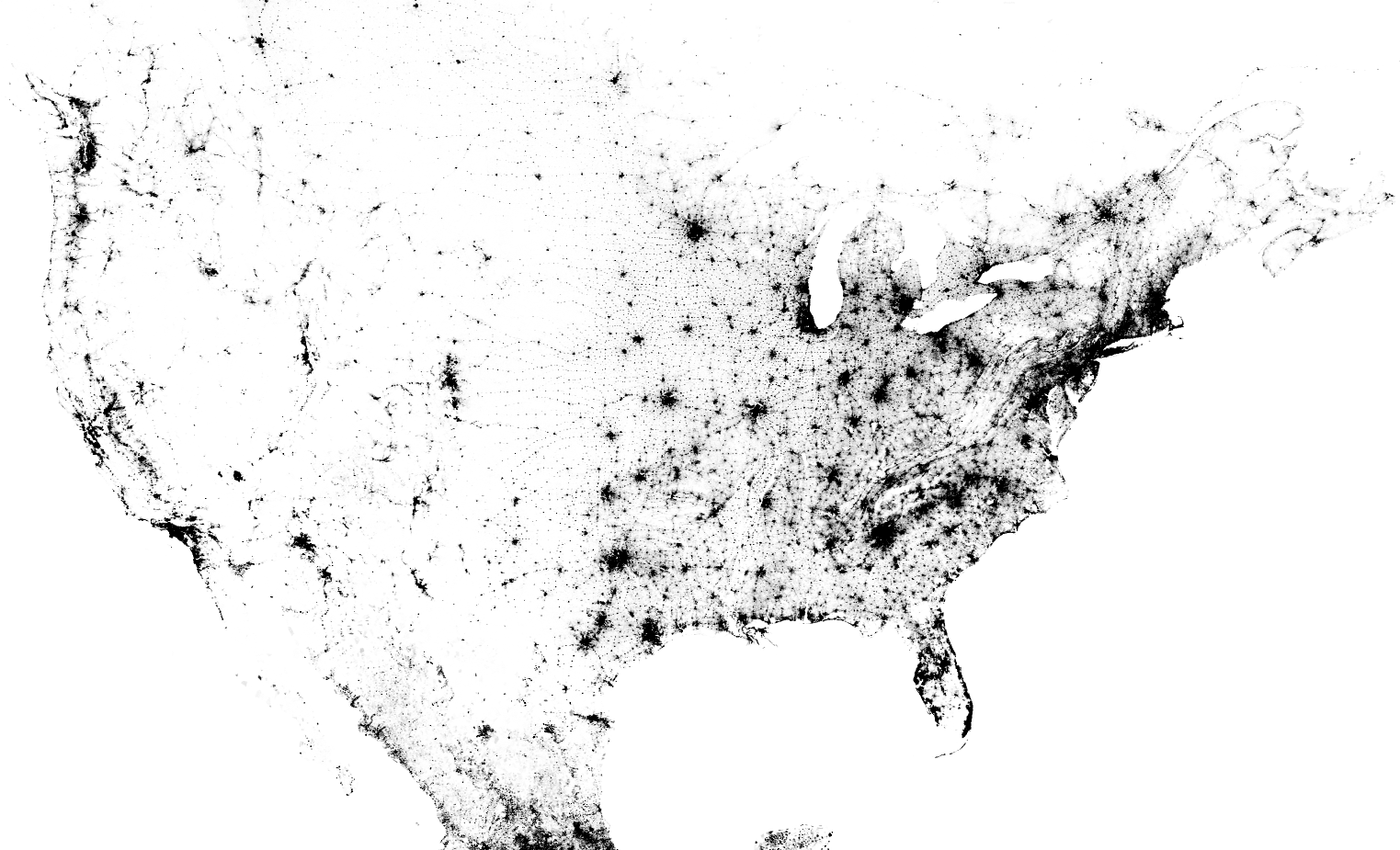
US map

Do you know all the different government bodies and districts that you’re a part of? Do you know who all your elected officials are? Do you know where and when to vote or when the next public meeting is? Now perhaps you’re thinking that this information is easy enough to find, so what does this have to do with open data? It’s true, it might not be too hard to learn about the highest office or who runs your city, but it usually doesn’t take long before you get lost down the rabbit hole. Government is complex, particularly in America where there can be a vast multitude of government districts and offices at the local level.

How can we have a functioning democracy when we don’t even know the local government we belong to or who our democratically elected representatives are? It’s not that Americans are simply too ignorant or apathetic to know this information, it’s that the system of government really is complex. With what often seems like chaos on the national stage it can be easy to think of local government as simple, yet that’s rarely the case. There are about 35,000 municipal governments in the US, but when you count all the other local districts there are nearly 90,000 government bodies (US Census 2012) with a total of more than 500,000 elected officials (US Census 1992). The average American might struggle to name their representatives in Washington D.C., but that’s just the tip of the iceberg. They can easily belong to 15 government districts with more than 50 elected officials representing them.

We overlook the fact that it’s genuinely difficult to find information about all our levels of government. We unconsciously assume that this information is published on some government website well enough that we don’t need to include it as part of any kind of open data program

Yes, the number of subdivisions of government and the number of elected officials are drawn from two different census reports, the first from the 2012 census and the second from the 1992 census, a gap of twenty (20) years.

The Census bureau has the 1992 list, saying:

1992 (latest available) 1992 Census of Governments vol. I no. 2 [PDF, 2.45MB] * Report has been discontinued

Makes me curious why such a report would be discontinued?

A report that did not address the various agencies, offices, etc. that are also part of various levels of government.

Makes me think you need an “insider” and/or a specialist just to navigate the halls of government.

Philip’s post illustrates that “open data” dumps from government are distractions from more effective questions of open government.

Questions such as:

  • Which officials have authority over what questions?
  • How to effectively contact those officials?
  • What actions are under consideration now?
  • Rules and deadlines for comments on actions?
  • Hearing and decision calendars?
  • Comments and submissions by others?
  • etc.

It never really is “…the local board of education (substitute your favorite board) decided….” but “…member A, B, D, and F decided that….”

Transparency means not allowing people and their agendas to hide behind the veil of government.

From President Obama, The Opaque

Thursday, February 28th, 2013

Leaked BLM Draft May Hinder Public Access to Chemical Information

From the post:

On Feb. 8, EnergyWire released a leaked draft proposal from the U.S. Department of the Interior’s Bureau of Land Management on natural gas drilling and extraction on federal public lands. If finalized, the proposal could greatly reduce the public’s ability to protect our resources and communities. The new draft indicates a disappointing capitulation to industry recommendations.

The draft rule affects oil and natural gas drilling operations on the 700 million acres of public land administered by BLM, plus 56 million acres of Indian lands. This includes national forests, which are the sources of drinking water for tens of millions of Americans, national wildlife refuges, and national parks, which are widely used for recreation.

The Department of the Interior estimates that 90 percent of the 3,400 wells drilled each year on public and Indian lands use natural gas fracking, a process that pumps large amounts of water, sand, and toxic chemicals into gas wells at very high pressure to cause fissures in shale rock that contains methane gas. Fracking fluid is known to contain benzene (which causes cancer), toluene, and other harmful chemicals. Studies link fracking-related activities to contaminated groundwater, air pollution, and health problems in animals and humans.

If the leaked draft is finalized, the changes in chemical disclosure requirements would represent a major concession to the oil and gas industry. The rule would allow drilling companies to report the chemicals used in fracking to an industry-funded website, called FracFocus.org. Though the move by the federal government to require online disclosure is encouraging, the choice of FracFocus as the vehicle is problematic for many reasons.

First, the site is not subject to federal laws or oversight. The site is managed by the Ground Water Protection Council (GWPC) and the Interstate Oil and Gas Compact Commission (IOGCC), nonprofit intergovernmental organizations comprised of state agencies that promote oil and gas development. However, the site is paid for by the American Petroleum Institute and America’s Natural Gas Alliance, industry associations that represent the interests of member companies.

BLM would have little to no authority to ensure the quality and accuracy of the data reported directly to such a third-party website. Additionally, the data will not be accessible through the Freedom of Information Act since BLM is not collecting the information. The IOGCC has already declared that it is not subject to federal or state open records laws, despite its role in collecting government-mandated data.

Second, FracFocus.org makes it difficult for the public to use the data on wells and chemicals. The leaked BLM proposal fails to include any provisions to ensure minimum functionality on searching, sorting, downloading, or other mechanisms to make complex data more usable. Currently, the site only allows users to download PDF files of reports on fracked wells, which makes it very difficult to analyze data in a region or track chemical use. Despite some plans to improve searching on FracFocus.org, the oil and gas industry opposes making chemical data easier to download or evaluate for fear that the public “might misinterpret it or use it for political purposes.”

Don’t you feel safer? Knowing the oil and gas industry is working so hard to protect you from misinterpreting data?

Why the government is helping the oil and gas industry protect us from data I cannot say.

I mention this an example of testing for “transparency.”

Anything the government freely makes available with spreadsheet capabilities, isn’t transparency. It’s distraction.

Any data that the government tries to hide, that data has potential value.

The Center for Effective Government points out these are draft rules and when published, you need to comment.

Not a bad plan but not very reassuring given the current record of President Obama, the Opaque.

Alternatives? Suggestions for how data mining could expose those who own floors of the BLM, who drill the wells, etc?

Competition: visualise open government data and win $2,000

Wednesday, February 13th, 2013

Competition: visualise open government data and win $2,000 by Simon Rogers.

Closing date: 23:59 BST on 2 April 2013

What can you do with the thousands of open government datasets? With Google and Open Knowledge Foundation we are launching a competition to find the best dataviz out there. You might even win a prize.

(graphic omitted)

Governments around the world are releasing a tidal wave of open data – on everything from spending through to crime and health. Now you can compare national, regional and city-wide data from hundreds of locations around the world.

But how good is this data? We want to see what you can do with it. What apps and visualisations can you make with this data? We want to see how the data changes the way you see the world.

In conjunction with Google and the Open Knowledge Foundation (who will be helping us judge the results), see if you can win the $2,000 prize.

All we want you to do is to take an open dataset from any government open data website (there’s a list of them at the bottom of this article) and visualise it.

The competition is open to citizens of the UK, US, France, Germany, Spain, Netherlands, Sweden. The winner will take home $2,000 and the result will be published on the Guardian Datastore on our Show and Tell site.

Here are some of the key datasets we’ve found (list below) – and feel free to bring your own data to the party – we only ask that it is freely available and open as in OpenDefinition.org.

You are visualizing data anyway, why not take a chance on free PR and $2,000?

O’Reilly’s Open Government book ["...more equal than others" pigs]

Monday, January 21st, 2013

We’re releasing the files for O’Reilly’s Open Government book by Laurel Ruma.

From the post:

I’ve read many eloquent eulogies from people who knew Aaron Swartz better than I did, but he was also a Foo and contributor to Open Government. So, we’re doing our part at O’Reilly Media to honor Aaron by posting the Open Government book files for free for anyone to download, read and share.

The files are posted on the O’Reilly Media GitHub account as PDF, Mobi, and EPUB files for now. There is a movement on the Internet (#PDFtribute) to memorialize Aaron by posting research and other material for the world to access, and we’re glad to be able to do this.

You can find the book here: github.com/oreillymedia/open_government

Daniel Lathrop, my co-editor on Open Government, says “I think this is an important way to remember Aaron and everything he has done for the world.” We at O’Reilly echo Daniel’s sentiment.

Be sure to read Chapter 25, “When Is Transparency Useful?”, by the late Aaron Swartz.

It includes this passage:

…When you create a regulatory agency, you put together a group of people whose job is to solve some problem. They’re given the power to investigate who’s breaking the law and the authority to punish them. Transparency, on the other hand, simply shifts the work from the government to the average citizen, who has neither the time nor the ability to investigate these questions in any detail, let alone do anything about it. It’s a farce: a way for Congress to look like it has done something on some pressing issue without actually endangering its corporate sponsors.

As a tribute to Aaron, are you going to dump data on the WWW or enable the calling of “more equal than others” pigs to account?

… ‘disappointed’ with open data use

Tuesday, November 20th, 2012

Prime minister’s special envoy ‘disappointed’ with open data use by Derek du Preez.

From the post:

Prime Minister David Cameron’s special envoy on the UN’s post-2015 development goals has said that he is ‘disappointed’ by how much the government’s open datasets have been used so far.

Speaking at a Reform event in London this week on open government and data transparency, Anderson said he recognises that the public sector needs to improve the way it pushes out the data so that it is easier to use.

“I am going to be really honest with you. As an official in a government department that has worked really hard to get a lot of data out in the last two years, I have been pretty disappointed by how much it has been used,” he said.

Easier to use data is one issue.

But the expectation that effort making data open = people interested in using it is another.

The article later reports there are 9,000 datasets available at data.gov.uk.

How relevant to every day concerns are those 9,000 datasets?

When the government starts disclosing the financial relationships between members of government, their families and contributors, I suspect interest in open data will go up.

Code for America: open data and hacking the government

Tuesday, October 9th, 2012

Code for America: open data and hacking the government by Rachel Perkins.

From the post:

Last week, I attended the Code for America Summit here in San Francisco. I attended as a representative of Splunk>4Good (we sponsored the event via a nice outdoor patio lounge area and gave away some of our (in)famous tshirts and a few ponies). Since this wasn’t your typical “conference”, and I’m not so great at schmoozing, i was a little nervous–what would Christy Wilson, Clint Sharp, and I do there? As it turned out, there were so many amazing takeaways and so much potential for awesomeness that my nervousness was totally unfounded.

So what is Code for America?

Code for America is a program that sends technologists (who take a year off and apply to their Fellowship program) to cities throughout the US to work with advocates in city government. When they arrive, they spend a few weeks touring the city and its outskirts, meeting residents, getting to know the area and its issues, and brainstorming about how the city can harness its public data to improve things. Then they begin to hack.
Some of these partnerships have come up with amazing tools–for example,

  • Opencounter Santa Cruz mashes up several public datasets to provide tactical and strategic information for persons looking to start a small business: what forms and permits you’ll need, zoning maps with overlays of information about other businesses in the area, and then partners with http://codeforamerica.github.com/sitemybiz/ to help you find commercial space for rent that matches your zoning requirements.
  • Another Code for America Fellow created blightstatus.org, which uses public data in New Orleans to inform residents about the status and plans for blighted properties in their area.
  • Other apps from other cities do cool things like help city maintenance workers prioritize repairs of broken streetlights based on other public data like crime reports in the area, time of day the light was broken, and number of other broken lights in the vicinity, or get the citizenry involved with civic data, government, and each other by setting up a Stack Exchange type of site to ask and answer common questions.

Whatever your view data sharing by the government, too little, too much, just right, Rachel points to good things can come from open data.

Splunk has a “corporate responsibility program: Splunk>4Good.

Check it out!

BTW, do you have a topic maps “corporate responsibility” program?

Yu and Robinson on The Ambiguity of “Open Government”

Saturday, August 11th, 2012

Yu and Robinson on The Ambiguity of “Open Government”

Legal Informatics calls our attention to the use of ambiguity to blunt, at least in one view, the potency of the phrase “open government.”

Whatever your politics, it is a reminder that for good or ill, semantics originate with us.

Topic maps are one tool to map those semantics, to remove (or enhance) ambiguity.